At the heart of many Nepalese festivals are ritual dances: without the performance of those dances there is no festival. Historically dances in Nepal as well as festivals themselves were patronized by kings. Only the king could decide to introduce a new dance-drama or a new festival. Special masks are worn during such ritual dances. These masks are made of perishable materials such as papier mache, wood plastered with clay and linen, and are painted in lively colours. The masked dances tell intricate stories about the gods as well as great heroes.
Showing posts with label festivals. Show all posts
Masked dances of Nepal
At the heart of many Nepalese festivals are ritual dances: without the performance of those dances there is no festival. Historically dances in Nepal as well as festivals themselves were patronized by kings. Only the king could decide to introduce a new dance-drama or a new festival. Special masks are worn during such ritual dances. These masks are made of perishable materials such as papier mache, wood plastered with clay and linen, and are painted in lively colours. The masked dances tell intricate stories about the gods as well as great heroes.
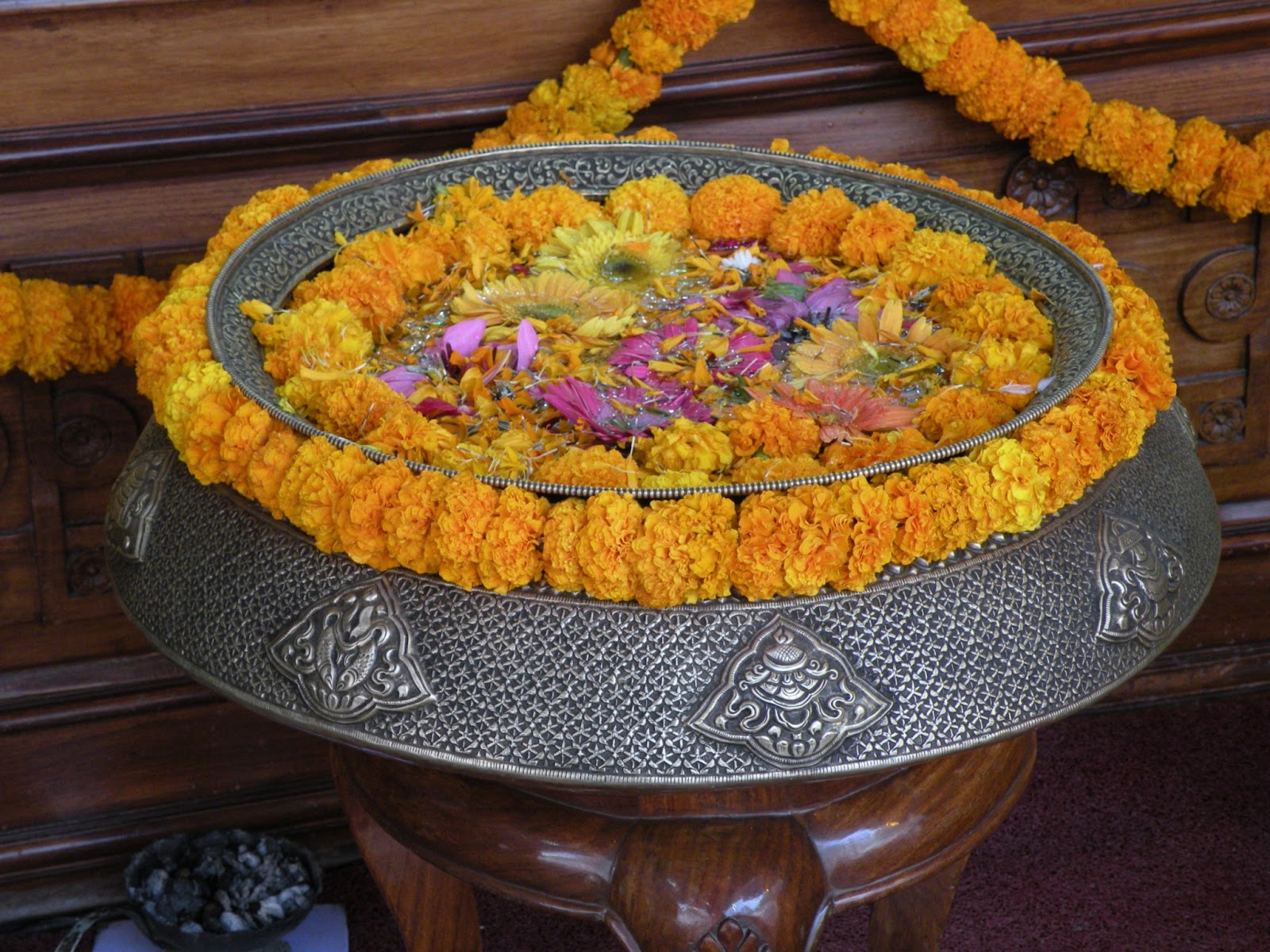
Basant Panchami: Festival of Spring
Colours of Diwali
Another year, and another Diwali has come - the most joyful, colourful and noisy in good sense festival. I have written about it before (here) and so, will not repeat myself. Just a few more new photos of pre-Diwali streets of Kathmandu.
Dasain, Nepal's greatest festival
One of the greatest festivals in Nepal is Dasain. It reminds me of Christmas in a way: same shopping fever when everybody buys gifts and new clothes, same gathering of all relatives together for celebration and same joyfull athmosphere around.
The ten days of Dasain represent both a battle of the forces of good over evil followed by celebrations for the success of good. The festival starts with the planting of jamara, a small plant whose needle shaped leaves are considered auspicious.
Teej: woman's day Nepali way
Namaste!
Teej is the festival of Hindu women honouring their husbands. The first day is called darkhana and at this day women enjoy a real feast: all kinds of curry - mutton, chicken, fish and vegetable, with chutneys, eggs, fruits and sweets. The women often gather in one room and seat themselves on the floor around a spread of dishes. They eat, chat, joke and dance until midnight when the Teej fast starts. Not the finest crumb of food or the smallest drop of water should be taken for the following twenty four hours. This strict fast is performed on behalf of one's husband to ensure his good health and long life. According to legends goddess Parvati fasted and prayed fervently for god Shiva to become his wife. Impressed by her devotion Shiva blessed her to be his wife. Parvati then sent emissary to spread the message of the religious fasting among mortal women promising prosperity and longevity to their husbands.
Krishna Jayanti festival
Samyak, the unusual festival of Nepalese Buddhists
Gutor and the Tibetan lama dances
Maha Shivaratri: the sacred night of Lord Shiva
Perahera, Sri Lankan street carnival
The season of peraheras in Sri Lanka is July, August, September. We visited the country in October so I didn't expect to see any perahera. But I was lucky: on the road to Galle we practically ran into one. That was amazing experience. First came the whip-crackers, who heralded the procession's arrival; next the flag-bearers - beautiful ladies in traditional dresses; then decorated elephants, drummers, musicians, acrobats and numerous dancers in different costumes.
Celebrating Holi in Kathmandu
Holi is the gayest and most carnival-like of all Nepali festivals. This is the festival welcoming spring time. Coloured powder is sprayed on everyone within reach, handful after handful of this powder is thrown into the air, over clothing and into the hair and faces of strangers and friends. Water balloons are tossed everywhere including into upstairs windows and passers-by and water is poured on each others from any possible vessels. Young boys decorate their faces with paintings of different design and stroll in the streets.
Nepalese festival Indra Jatra
Indra Jatra is one of the most important Nepalese festivals. The main “hero” of the festival is god Indra, Ruler of Heaven, controller of clouds and storms. Legend says that once upon a time Dagini, Indra’s mother, requested her son to bring a certain white flower called “parijat” which grew in the Kathmandu Valley. Indra disguised himself as an ordinary man and landed on Earth. He found the flowers but was caught “red-handed”. He was put in a prison then. Dagini, anxious not to see her son return to heaven, went down herself to Earth and made herself known to people. Then Indra was released and Dagini as a token of gratitude promised to spread enough dew over the valley during winter to ensure a rich crop.
Buddha's birthday
Rainbowed Holi
Namaste!
Holi is the gayest of all Nepali festivals. On this day it is better to wear white clothes and then in the process of celebration they would become rainbowed. And not just clothes - hands, hair, face ... People shower each other with colored powder, pour tinted water, arrange the "battle", when opponents bombarding each others with balloons filled with water. Impacts quite painful and, of course, the bursting balloon douses you with water. All this is accompanied by screaming, laughing, shouting ... Also in this day a special drink is brewed from some kind of narcotic herb, which too plays its role in the maintenance of fun ...
Loud, colorful celebration ...
See also Celebrating Holi in Kathmandu
Tamang Lhosar (New Year)
Namaste!
Yesterday people of Tamang community of Nepal celebrated the beginning of the new year, Sonam Lhosar. According to their calendar the started year is 2846. Women and girls wore their national dresses and jewellry and almost everybody wore a traditional topi (a cap) (well, me too bought one and put it on).
Gai Jatra, the festival of holy cow
Here I am, back in Nepal. And just in time to see yesterday’s festival Gai Jatra. Gai Jatra means “festival of cows”. During the festival musical processions of little boys dressed as young lord Krishna or stylized cows, followed by their family and friends take place throughout Kathmandu, Patan and Bhaktapur. Any family who has lost someone in the preceding year participate in the procession. The belief is that the cow assists the soul of the departed in the journey to heaven. And if a cow is not available then a young boy dressed up as cow is substituted.
I watched the festival in Basantapur. The processions were very colourful and noisy. The boys were dressed in red or yellow or white. The musicians played drums and trumpets and even some kind of local horns, very long and thin, and there was a group who played flutes. Some people sang special songs and held the portraits of their departed beloved ones.
Basanta Panchami, Saraswati's spring festival

"Panchami" is derived from the Sanskrit word "panch" meaning five. And every Nepali month has a Panchami festival on the fifth day of the waxing moon. But Sri Panchami, also called Basanta Panchami, is the most important of all Panchami festivals. This day though falling on January officially marks the beginning of spring in Nepal. This festival is also associated with the worship of Saraswati, the Hindu goddess of learning and knowledge. On the day of Sri Panchami thousands of devotees in the Kahtmandu Valley pay homage to her. School children and students make up the majority of the crowd. They make puja to their books, visit a Saraswati’s temple and pray for success in the coming year or in any important examination they may be taking. It is believed that worshipping Saraswati on this day increases one’s knowledge and improves studies.
Subscribe to:
Posts (Atom)


